Smart engineering keeps complex food facility project on budget
The original project was given the go-ahead with a fixed budget in summer 2021, but due to various delays, including planning permission, it did not progress until December 2023, with the budget remaining unchanged.
RB Plant was brought on board in January 2024 to support design, project engineering, and management functions that were not originally costed but were recognised by the client as essential due to limited in-house capacity.
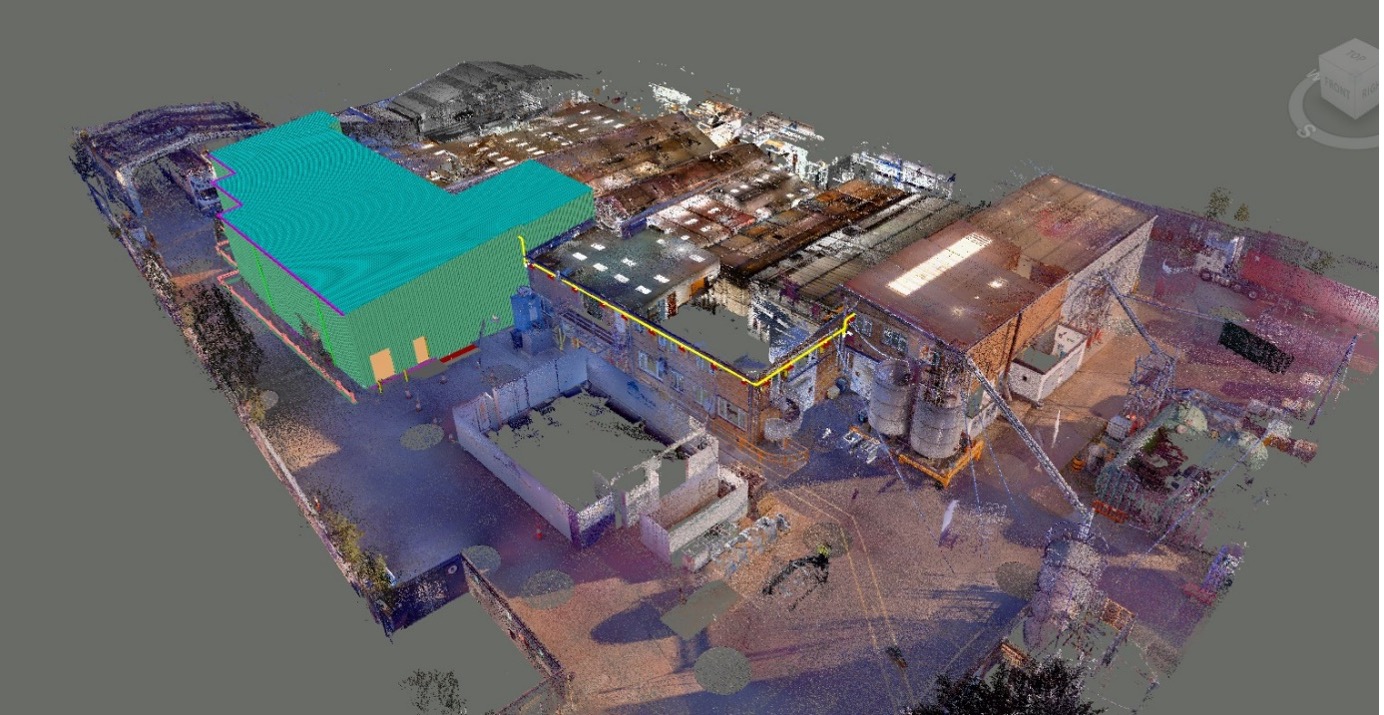
To build a new facility adjacent to the client’s existing production facility. It is a two-storey building matching up with the existing facility at various points.
Ground Floor: Installation of a new jar pasteurisation plant and conveyor system, transferring product from the existing building, processing it, and returning it for labelling and packing.
First Floor: Installation of four 1000L sauce cooking vessels with tote bin lifters. The system cooks sauces and transfers product via a new pigged line to filling lines in the existing facility.
- Project delays while maintaining a fixed budget created significant cost pressures. RB reviewed and rationalised the building design to improve costs, buildability, and reduce areas of cost risk.
- Lack of early-stage project structuring (e.g. stage gate approach) increased risk.
- Significant value engineering was required after the main contract had already been awarded.
The RB team reviewed and rationalised the building design to enhance cost efficiency, improve buildability, and minimise areas of cost risk including:
- The original building fit-out specified white wall hygienic composite panels, as on previous food-related projects. The cost was considered too high, and following a short design review RB Plant specified a more cost-effective solution. The cost of this big-ticket item was reduced by 40%, and the order was placed immediately.
- Regarding the main food process, the initial P&ID reflected all requirements the client considered necessary. However, a detailed review of the product range allowed us to remove a number of feeds, their pipework, valves and their associated control system requirements. These would be put into the system at a later date, as and when required. As a result of this exercise, it was determined that the future expansion plans could be carried out more effectively by providing new feed systems that are not parasitic on existing feeds, as was initially the case.
- We even reviewed the building’s doors. The original specification came from another food project. When costs came in, and following discussions with the Client, Supplier, and the Main Contractor, an alternative door system was used, saving the project £20,000.
- The initial P&ID incorporated all requirements identified by the client. However, a detailed review of the product range enabled the removal of several feeds, along with associated pipework, valves, and control system components. These elements can be incorporated at a later stage as and when required. As a result, future expansion can now be implemented more efficiently by introducing independent feed systems, rather than relying on extensions to existing infrastructure, as originally proposed.
This work was carried out after the main contract had been let and has been a painful but ultimately successful value engineering exercise, which was necessary to keep to the original budget of £2.8M. The project has suffered from lack of a stage gate approach, but one could argue that the project may have failed the gate if these savings had not been made.
DOWNLOADS
You may download a pdf of this case study via this link.